From acidity to vintage, no sweat
No-Fuss Glossary
Every term in one honest line. Search, learn, and never let a fancy word fool you again.
Pocket Guide: the 20 essential terms on one page, to read right here, print or keep on your phone. Open the Pocket Guide
Or build your own. Tap + in my guide on the terms you want, up to 20, and download the PDF, ready to go. To get started:
100 terms in the glossary
A
- Acidez (acidity)
- What keeps a wine lively and makes your mouth water. High acidity = an “electric” wine, great with food.
- Adega (cellar)
- In Portugal, it's the winery itself (“adega cooperativa”). In Brazil, it's where the wine is kept: a cool, dark cupboard with no smells will do. Yours, here on the site, keeps bottles, notes and badges, for free. My Cellar →
- Altitude (high-altitude wine)
- Vineyards way up high (Cafayate, in Argentina, and the Chapada Diamantina go past 1,000 m): hot days, cold nights. The grapes ripen slowly and hold on to acidity, color and aroma. Altitude is climate, not a prize.
- Amadeirado (oaky)
- Spent time in wood (almost always oak) and picked up notes of vanilla, coconut, toast.
- Aroma
- What the nose catches before the mouth does. Primary comes from the grape (fruit, flowers); secondary, from fermentation (bread, butter); tertiary, from time (leather, tobacco, dried fruit). Smelling just “wine” is a right answer too.
- Assemblage
- Assemblage → blend. A mix of grapes or lots. Same thing. One of the two words costs more on the wine list.
- Avinagrado (vinegary, acetic)
- Wine that turned into vinegar: bacteria, with help from the air, turned the alcohol into acetic acid. Smells of vinegar or nail polish. The fault of a bottle left open too long or stored in the heat, and it's a different fault from cork taint. Guide →
B
- Barrica (barrel)
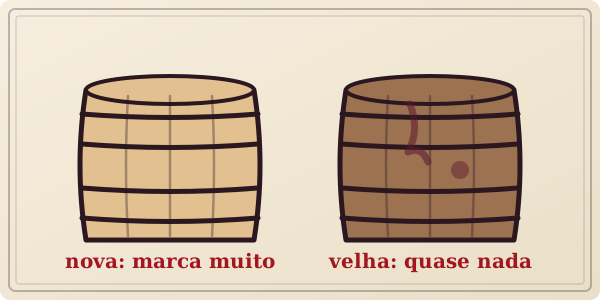
- The oak barrel. New wood marks a wine heavily; old wood, hardly at all.
- Blanc de blancs / blanc de noirs
- In sparkling wine: blanc de blancs is made only from white grapes (Chardonnay, almost always); blanc de noirs, only from red grapes pressed without the skins (Pinot Noir, Meunier). Both come out pale in the glass.
- Blend (corte)
- A wine made from more than one grape. Not a flaw: some of the greatest wines in the world are blends.
- Botrytis (noble rot)
- A fungus that, in just the right mist, shrivels the grape on the vine and concentrates the sugar: it's the origin of Sauternes and Tokaji, the most famous sweet wines in the world. On the wrong grape or in the wrong weather, it's just rot.
- Bouquet
- The set of aromas a wine develops with time in the bottle, different from the fruity aroma of its youth.
- Branco (white)
- Wine fermented without the skins: the juice goes to the tank and the skins stay behind. It can even be born from red grapes (see blanc de noirs). It has more acidity and less tannin than a red, and likes the cold.
- Brut
- Dry sparkling wine, with little sugar. Extra-brut and nature: drier still. Guide →
C
- Carvalho (oak: French × American)
- The wood the barrels are made of. French oak is fine-grained and marks discreetly (spice, toast); American oak has coconut and vanilla up front and costs a lot less. Neither is “the right one”: it's seasoning, and each winery has its own recipe.
- Casta / cepa (grape variety)
- Casta is what Portugal calls the grape (“castas Touriga Nacional e Tinta Roriz”). Cepa, in Argentina and Chile, is the vine, and on the label it means the grape too. Both mean variety.
- Cava
- Spain's traditional-method sparkling wine, almost all of it from Catalonia, from the Macabeo, Xarel·lo and Parellada grapes. Fine bubbles for a fraction of the price of Champagne.
- Champagne
- Sparkling wine from the Champagne region, in France. The rest of the world makes sparkling wine too, some just as good for a third of the price.
- Chaptalização (chaptalization)
- Sugar added to the must before fermentation, to raise the alcohol (not to sweeten: the yeast eats it all). Allowed in Brazil, with a cap; in a Reserva only up to 1% more alcohol, and a Gran Reserva gets none. Guide →
- Charmat
- Sparkling wine made in a tank: more fruit, less bread. It's the method behind prosecco, and behind some excellent Brazilian ones.
- Colheita tardia (late harvest)
- Grapes picked very ripe, almost raisined: a sweet dessert wine. Also shows up as “late harvest”.
- Contrarrótulo (back label)
- The back label, where the real information lives: grape, region, alcohol, who made it and who imported it. The front is the shop window; the back label is the document. It's also the name of the house magazine. Magazine →
- Corpo (body)
- The wine's “presence” in the mouth, from water (light) to whole milk (full-bodied).
- Crianza
- In Spain, the step below Reserva: a red with 24 months of aging, 6 of them in barrel (18 and 6 for white and rosé). It's law, not marketing: you can trust the label.
- Cristais (tartrate crystals)
- The “diamonds” at the bottom of the bottle or stuck to the cork: tartrate, the salt of the grape's natural acid, which crystallizes in the cold. No taste, no danger and no glass. At most, a sign that the winery didn't chill the wine before bottling, a step many producers skip on purpose.
- Cru / Grand Cru
- A specific, celebrated vineyard (Burgundy, Champagne). Geography raised to a religion: interesting, not compulsory.
- Cuvée
- A French word for a specific lot or blend; in Champagne, also the juice from the first pressing, the finest. “Special cuvée” on a label means whatever the winery wants it to mean.
D
- Decantar (decanting)
- Pouring the wine into another vessel: it separates the sediment (old wines) and airs it out (closed young ones). Half an hour in the glass does the job in most cases. Guide →
- Demi-sec / meio-seco (off-dry)
- With noticeable sugar. In sparkling wine, it goes well with dessert.
- DOC / DOCG / AOC / DO
- Controlled-origin seals (Italy, France, Portugal, Spain, Brazil): they say where the wine comes from and under what rules. Origin, not a quality score.
- Doce (sweet)
- In sparkling wine, the sweetest class in Brazilian law: over 60 g of sugar per liter. In still wine, the matching class (over 25 g) is called suave. It's sugar the fermentation didn't eat, or was stopped from eating. Guide →
E
- Engaço (stems)
- The little stalk of the bunch, the green part that holds the grapes. It almost always comes off before fermentation (“destemming”); when it stays, it adds tannin and a herbal touch, on purpose.
- Enólogo (winemaker)
- The person who makes the wine: from grape to bottle, they decide harvest, fermentation, wood and blend. In Brazil it's a profession with a degree and a law (since 2007). The sommelier serves; the winemaker makes.
- Espumante (sparkling wine)
- Wine with gas pressure from a second fermentation. The category where Brazil shines brightest.
- Extra-brut
- Between nature and brut: 3 to 8 g of sugar per liter. Properly dry, without the sharpness of a nature. A good one to order when “brut” tastes a bit sweet to you. Guide →
F
- Fermentação (fermentation)
- Yeast eats the grape's sugar and gives back alcohol, gas and heat. It's what turns juice into wine. The “second fermentation” of a sparkling wine is the same thing, done again to trap the bubbles.
- Filoxera (phylloxera)
- The American aphid that devoured the roots of Europe's vineyards at the end of the 19th century. The cure was grafting the European vine onto resistant American rootstock: almost every vineyard in the world is like that to this day. Chile escaped.
- Fortificado (fortified)
- Wine with grape spirit added (Port, Sherry, Madeira): more alcohol, usually more sweetness, a very long life.
- Frisante (semi-sparkling wine)
- The bubbly middle ground: less pressure than a sparkling wine, light, easy, usually cheap.
G
- Garrafão (the big jug)
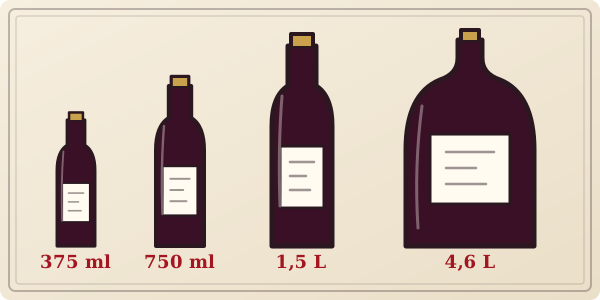
- The 4.6-liter glass jug of table wine, the one at the family barbecue. It's packaging, not a category: it says how much fits, not what it's like. Many also come in a 750 ml bottle.
- Gran Reserva
- In Spain, long aging guaranteed by law (60 months for reds). In Argentina, 24 months; in Brazil, 18, with wood. Outside Spain, read it with a pinch of salt (see Reserva).
- Guarda (vinho de guarda: a wine to age)
- Made to improve with years in the bottle. A tiny minority: most wines are born to be drunk young.
H
- Food pairing
- A suggested match between food and wine. A suggestion. The jury is your palate.
I
- IGT / IP
- More flexible geographical indications (Italy / Brazil). Fewer rules doesn't mean worse wine: the Super Tuscans became legends outside the appellation, and Sassicaia even got a DOC of its own.
- Inox (stainless steel)
- A stainless-steel tank: it adds no flavor, controls the temperature and keeps the fruit. It's where most whites, rosés and young reds are born. Barrel is a choice, not an obligation.
J
- Jerez (Xerez, Sherry)
- The fortified wine of Andalusia, in Spain. It goes from fino and manzanilla (dry, salty, to drink chilled) to oloroso (dark, nutty) and Pedro Ximénez (sweet as syrup). Three names, the same wine: Spanish, Portuguese and English.
- Jovem (young)
- Wine to drink soon, with little or no wood, that leaves the winery the year after the harvest (“joven” on Spanish and Argentine labels). Young isn't lesser: most of the world's wine is like this.
L
- Lágrimas (legs, tears)
- The streaks that run down the glass after a swirl. They're the alcohol evaporating faster than the water, that's all: thick legs mean a more alcoholic (or sweeter) wine, not a better one.
- Levedura (yeast)
- The fungus that makes the wine: it eats the grape's sugar and gives back alcohol and gas. It can be the one already living on the skin (the “wild” one) or a selected one, more predictable. Without it, it's juice.
M
- Maceração (maceration)
- The time the juice stays in contact with the grape skins (and seeds): that's where a red gets its color, tannin and aroma. Hours give you rosé; weeks give you a red for aging. Whites barely macerate; orange wine macerates like a red.
- Magnum (and other sizes)
- The 1.5-liter bottle, two regular ones. It ages more slowly (less air per liter) and dresses up the table. A half bottle holds 375 ml; a regular one, 750; from 3 liters up the names change from region to region (jeroboam, methuselah…).
- Malolática (malolactic)
- The second transformation, done by bacteria rather than yeast: malic acid (green apple) turns into lactic (milk). It softens almost every red and gives certain Chardonnays their buttery touch.
- Método tradicional (traditional method)
- Second fermentation inside the bottle: fine bubbles, notes of bread and brioche. More expensive to make; it's the Champagne method.
- Mineralidade (minerality)
- Taste of wet stone → vague term that science is still debating. Everyone uses it, nobody can define it. Use it guilt-free.
- Moscatel
- The grape (moscato, muscat) that smells of grapes, and the sweet Brazilian sparkling wine made from it, in a single fermentation, stopped halfway so sugar is left over. Farroupilha (RS) is its capital, with an indication of origin just for it. Guide →
- Mosto (must)
- The grape juice before fermentation, with or without the skins. It's the raw material: what the yeast will turn into wine.
N
- Nature
- The driest sparkling wine of all: up to 3 g of sugar per liter, next to nothing (the scale from Brazil's 2014 decree, revoked in 2025, which labels still follow). On imported labels, brut nature or zero dosage. Nothing to do with natural wine. Guide →
O
- Orgânico / biodinâmico (organic / biodynamic)
- Organic: a vineyard with no synthetic pesticides or fertilizers, with certification. Biodynamic: organic plus a lunar calendar and its own preparations, with its own certification (Demeter). They say how the grapes were grown, not what the wine is like.
- Oxidado (oxidized)
- Wine that took a beating from oxygen: brick color, a smell of overripe apple. In Sherry it's a deliberate style; in your Tuesday-night red, it's a fault.
P
- Perlage
- Perlage → the bubbles. Fine and persistent ones usually point to a well-made traditional method. That's it. Guide →
- Pét-nat
- Pétillant naturel, the oldest sparkling wine there is: bottled before the first fermentation is over, with the bubbles finishing inside the bottle. Cloudy, light, beer cap. It can be delicious or just confused.
- Pirazina (pyrazine, the green pepper)
- The green-pepper smell of certain Cabernets, Carmenères and Sauvignon Blancs. It comes from a molecule in the grape (methoxypyrazine) that fades with sun and ripening: lots of green pepper usually means grapes picked early.
- Porto (Port)
- The fortified wine of the Douro, in Portugal: halfway through fermentation, grape spirit goes in, stops the yeast and leaves the grape's sugar in the wine. Sweet and strong (around 20% alcohol). Ruby and tawny, LBV and vintage are the styles. Region →
- Prosecco
- Sparkling wine from northeastern Italy (Veneto and Friuli), from the Glera grape, almost always made in a tank (Charmat): fruit, lightness, a good price. It's the name of a place (the village of Prosecco, near Trieste, became a DOC); in Brazil, some wineries still write the word on the label as the grape's name.
R
- Redução (reduction, the struck-match smell)
- The opposite of oxidized: a wine that went too long without air and smells of struck match, egg or rubber when opened. It almost always blows off after a few minutes in the glass or a decanter. If it doesn't, then it's a fault.
- Reserva
- A word with a strict law in Spain, a minimum time in Argentina and Brazil (in Brazil, 12 months for reds and 11% alcohol: a flexible rule), half a degree more alcohol in Chile. Context is everything. Guide →
- Reservado
- Requires nothing: no aging, no selection. In Brazil the law even defines it: “young wine ready for consumption”. It usually names the winery's most basic line, with a pompous name. Guide →
- Retrogosto (finish)
- What stays in the mouth after you swallow (the “finish”). Long and pleasant is usually the sign of a wine with class.
- Rolha (corked: bouchonné / TCA)
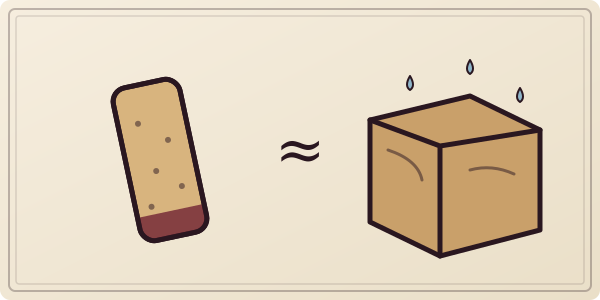
- Cork taint: a smell of wet cardboard, mold. It's not “vinegary” wine: it's a different fault. In a restaurant, you can send it back.
- Rosé
- Made from red grapes with little skin contact. It's not a mix of red and white; that's even banned in Europe (except in Champagne).
S
- Safra (vintage)
- The harvest year (vintage, cosecha, millésime, annata: the same thing on each label). It tells you the age and, in regions with unstable weather, the luck of that year.
- Seco (dry)
- No noticeable sugar (Brazilian law sets the limit). Not to be confused with bitter or with “strong”. Guide →
- Sedimento (sediment)
- The dark dust at the bottom of an old red: tannin and color that clumped together and fell out over the years. Harmless, but bitter in the mouth: that's why you decant. In a white, what shows up is the crystals, another story.
- Sem álcool (alcohol-free, dealcoholized)
- Real wine that had its alcohol removed after it was made. Brazilian law says it must be called “fermentado de uva desalcoolizado” (dealcoholized grape ferment) and bans the expressions “vinho sem álcool” and “vinho desalcoolizado” from the label. Sparkling and aromatic whites work better than reds. Guide →
- Solo (soil: schist, granite, clay…)
- The ground of the vineyard, which the bottle loves to mention: schist in the Douro, granite in the Dão and the Vinho Verde, clay and limestone in so many places. It affects water and heat at the root; the taste of stone in the mouth is just talk (see minerality).
- Sommelier
- A wine-service professional. The good ones are worth their weight in gold; the fuss is thinking you need one to drink well.
- Suave (sweet, in Brazil)
- In Brazil, sweet wine (usually table wine). It's not a synonym for “light”: it's sugar, plain and simple. Guide →
- Sulfitos (sulfites)
- The preservative (sulfur dioxide) that almost every wine carries, natural wine included: it protects from air and bacteria. Fermentation itself produces a little. The “contains sulfites” on the label is a standard warning, not an alarm.
- Sur lie / bâtonnage
- “On the lees”: the wine rests with the dead yeast after fermentation, and bâtonnage is stirring it. It gives creaminess and bread to whites and sparkling wines. Muscadet and Champagne live off it.
T
- Taça (glass)
- A wide bowl with a narrower rim works for almost everything: it concentrates the aroma and lets you swirl. Fine crystal helps; having a glass for each grape is a hobby, not a requirement. The copo americano, the everyday tumbler, drinks just fine too.
- Talha / ânfora (amphora)
- Wine fermented in a clay pot, the way the Romans did it: in the Alentejo it's the talha, in Georgia the qvevri, and the world calls it amphora. No wood, no steel: the clay breathes and gives texture. The Alentejo has certified Vinho de Talha in its DOC.
- Tampa de rosca (screw cap, and synthetic cork)
- An aluminum closure, standard in Australia and New Zealand: it never gives you cork taint and keeps a young wine fresh. It's not a sign of cheap wine. The synthetic cork does the same job, with less elegance.
- Tanino (tannin)
- The astringency that “grips” the tongue, like strong black tea. It comes from the skin, the seeds and the wood. It mellows with time in the bottle and fatty food. Guide →
- Tawny / Ruby
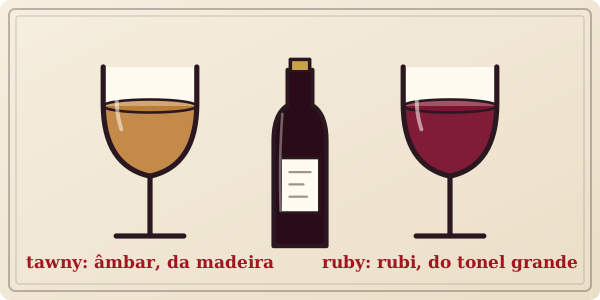
- The two everyday Ports. Ruby ages briefly, in large vats, and stays ruby-colored, with red fruit. Tawny ages in small wood, oxidizes slowly and turns amber, with nuts and caramel; the ones with an age (10, 20 years) are blends of several years put together to taste like that age, not a calendar count. Tawny goes chilled.
- Temperatura de serviço (serving temperature)
- Sparkling 6 to 10 °C, white and rosé 8 to 12, light red 12 to 14, full-bodied red 16 to 18. “Room temperature” meant Europe's, 16 °C: in Brazil, a red goes 20 minutes in the fridge. Guide →
- Teor alcoólico (alcohol content)
- The “% vol.” on the label: how much of the liquid is alcohol. Almost every wine sits between 11% and 15%; fortified goes past 15%. It's the most useful piece of mandatory information on the bottle: from 13% up, food and a glass of water within reach.
- Terroir
- The complete package of a place: soil, climate, altitude and the hand of whoever makes the wine. It does exist; it just became a status word along the way.
- Tinto (red)
- Wine fermented with the skins of red grapes: that's where the color and the tannin come from. The pulp of almost every grape is pale; red is a winemaking decision, not a fruit one.
V
- Varietal
- A wine from (practically) a single grape, which carries its name on the label: Malbec, Chardonnay, Tannat…
- Vindima (harvest)
- The grape harvest, the tensest month of the year. In Brazil, January to March; in the rest of the southern hemisphere (Argentina, Chile, South Africa, Australia), February to April; in Europe, August to October. The São Francisco Valley gets two harvests a year and the Chapada Diamantina harvests in winter. Trips →
- Vinhas velhas (old vines)
- Old vines (30, 50, 80 years) produce fewer bunches and more concentration. There's no minimum age in the law of most countries: “vinhas velhas”, “vieilles vignes” and “old vines” on a label are worth whatever the winery says.
- Vinho de mesa (table wine)
- In Brazil, what the label calls just “vinho de mesa” (table wine, without the “fino”) is made from American or hybrid grapes (Isabel, Bordô); in the law, “de mesa” is the parent category, and fino is table wine made only from viniferas. Another category, another purpose, another price, no apologies.
- Vinho fino (fine wine)
- In Brazil, made from vinifera grapes (Cabernet, Merlot, Chardonnay…). “Fino” is a legal category, not a compliment.
- Vinho laranja (orange wine)
- A white made like a red: the white grapes ferment with the skins for days or months and come out amber, with tannin and a smell of orange peel and tea. A Georgian invention, thousands of years old, it became fashionable in the 2000s. There's no orange in it.
- Vinho natural (natural wine)
- A minimal-intervention movement (little or no sulfite). The legal definition is still loose: it can be excellent — or just cloudy and expensive.
- Vinho Verde
- A region in northwestern Portugal, not a young wine or a color: a light, fresh white, low in alcohol and sometimes with a prickle of gas. Alvarinho and Loureiro are the big-name grapes. There's red and rosé from there too. Region →
- Vinícola (winery: bodega, château, domaine…)
- The maker of the wine, in each language: bodega in Spain and Argentina, château and domaine in France, cantina and tenuta in Italy, quinta in Portugal, weingut in Germany, winery in English. The name changes; the job is the same.
- Vinífera (and American, hybrid)
- Vitis vinifera is the European species: Cabernet, Merlot, Chardonnay, everything that makes vinho fino (Brazil's “fine wine” category). The American ones (Isabel, Bordô, Niágara) are other species, rustic and grapey in aroma; hybrids cross the two. In Brazil, it's the line that separates vinho fino from vinho de mesa (table wine).
- Vintage / LBV
- In Port: vintage is from one exceptional year, bottled early to age for decades in the bottle (and it gets decanted); LBV (late bottled vintage) is from a single year too, but spent 4 to 6 years in wood and comes out ready to drink, for a fraction of the price. Outside Port, vintage is just the English word for the harvest year.
- Vinhozinho
- n. The no-fuss way to learn wine. Making wine simple since 2012 · Brazil.