No-Fuss Guide · No. 11
Reserva, Gran Reserva, Reservado: what each word is worth, country by country
“Reserva” on a bottle sounds like a special wine. In some countries it is: there's a law, months in barrel and an inspector. In others, it's just a pretty word on the winery's cheapest line. The yardstick changes at the border.
The short answer
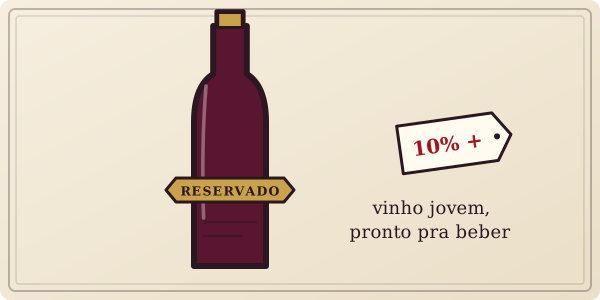
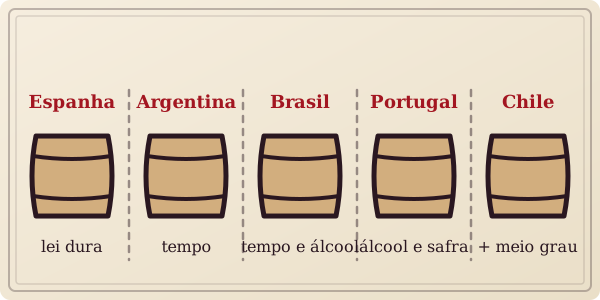
Spain: strict law. Argentina: law, but only about time. Brazil: a law since 2018, and a loose one: time, minimum alcohol and a cap on sugar in the must. Portugal: law, but about alcohol and vintage. Chile: half a degree more alcohol. And “Reservado” is, by Brazilian law, the winery's young wine: it asks for nothing beyond 10% alcohol.
Spain: the only one with a real yardstick
Spanish law (today in Ley 6/2015, which inherited the yardstick of the 2003 Ley de la Viña y del Vino) sets, for reds: Crianza = 24 months of aging, 6 of them in barrel; Reserva = 36 months, 12 in barrel; Gran Reserva = 60 months, 18 in barrel. Whites and rosés have shorter terms. Each appellation (Rioja, Ribera del Duero) may demand more, never less. It's the most trustworthy “Reserva” in the world.
Argentina: minimum time, no barrel required
The INV's Resolución C.11/2011 rules: Reserva = a red with at least 12 months of aging (6 for white and rosé); Gran Reserva = 24 months (12 for white and rosé), and it demands more grapes per liter (140 kg of grapes per 100 liters, against 135 for Reserva). No barrel required: the wine can age in the tank. It says age, not quality.
Portugal: vintage and half a degree
Under Portaria 26/2017, Reserva is wine from a single harvest year, with “outstanding organoleptic characteristics” and alcohol at least 0.5% above the region's minimum. Garrafeira is the strong word over there: a red with 30 months of aging, 12 of them in the bottle. “Grande Reserva” depends on each region's rules.
Chile: alcohol, not time
Decreto 464 says a Reserva needs at least 0.5 degrees of alcohol above the legal minimum (11.5°) and “may” go through wood; Gran Reserva, 1 degree more and wood required. Not a single month of aging demanded. A Chilean Reserva at 12° is within the law.
Brazil: there's been a law since 2018, and it's a loose one
IN 14/2018 from Brazil's Ministry of Agriculture (art. 30) created the yardstick for vinho fino (Brazil's “fine wine” category) made in the country, and it's optional: the winery uses the word if it wants to, and then it has to comply. What it asks for is a mix of time and alcohol: Reserva = alcohol of 11% or more (ordinary vinho fino can start at 8.6%) and 12 months of aging for reds (6 for white and rosé), wood optional, which means it can be in the tank; Gran Reserva = the same 11% and 18 months for reds (12 for white and rosé), with at least 6 months in wood of up to 600 liters (3 for whites). And there's a detail almost nobody mentions: the law caps the sugar added to the must to raise the alcohol (chaptalization): in a Reserva, only enough to gain 1 point; in a Gran Reserva, none. It says time and alcohol, not quality, and the bar is low: plenty of entry-level wine fits. It applies only to Brazilian wine; imports follow the rules of their own country. There are excellent Brazilian Reservas; it's the word that guarantees little. Look at the rest of the label (the 4 pieces of information that matter).
And “Reservado”?
In Brazil the law even defines it: “young wine ready for consumption”, with 10% alcohol or more (IN 14/2018, art. 30), which is the same as saying entry-level wine. In Chile the word appears in Decreto 464, but as a free mention: it requires no alcohol, wood or time. In other countries, not even that. It usually christens the winery's simplest wine with a pompous name. It can be good and cheap; it's just not “reserved” for anything at all.