No-Fuss Guide · No. 10
What is tannin? That strong-black-tea feeling, explained
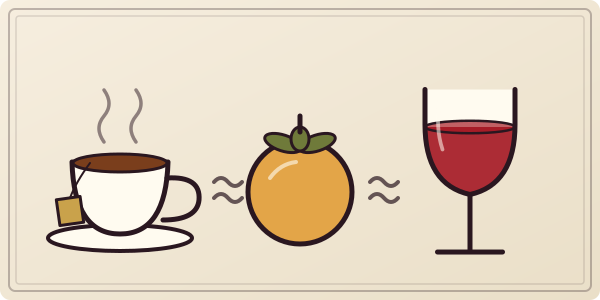
You've felt it: the sip grips your tongue and gums, like over-steeped black tea or an unripe persimmon. That's tannin. It's not a fault, it's not acidity and it's not alcohol. It's the backbone of red wine.
What it is, where it comes from
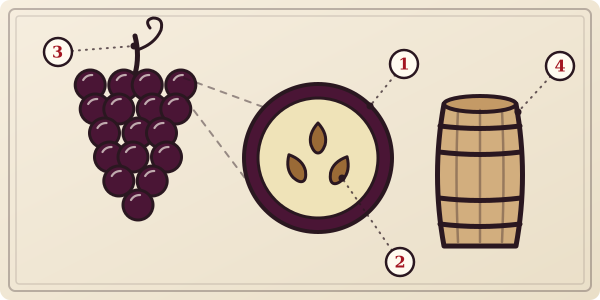
Tannins are natural compounds in the grape, concentrated in the skin, the seeds and the stems (the little stalk of the bunch), and also in the wood of the barrel. When the wine stays in contact with those parts during fermentation, the tannins pass into the liquid. That's why almost every red has tannin and almost no white does: white ferments without the skins. Seed tannin is the hardest: bitter and rough; skin tannin is softer and gives the body. That's why the winemaker takes care not to crush the seeds in the press.
How it feels
It's not a taste, it's texture: tannin reacts with the proteins in your saliva and your mouth loses its lubrication, hence that dry, rough, “grips-your-tongue” feeling. A wine can be dry (little sugar) and have little tannin, like a Pinot Noir; or have tannin to spare, like a young Tannat. One has nothing to do with the other. Mixing up tannin and dry is the most common mistake on the shelf.
Grapes with lots of tannin, and with little
- Lots: Tannat, Cabernet Sauvignon, Nebbiolo, Sangiovese, Syrah, young Malbec, Touriga Nacional;
- Medium: Merlot, Tempranillo, Carmenère;
- Little: Pinot Noir, Gamay, Grenache. Like your reds “soft”? Start here.
What tames tannin
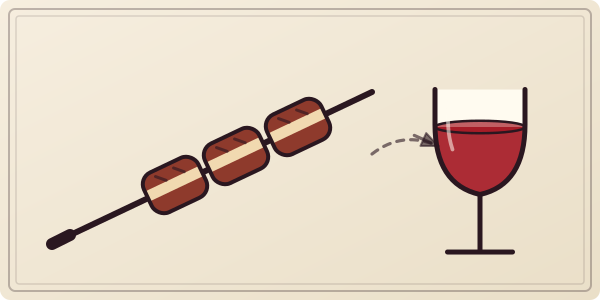
- Fatty food: the fat and protein in meat occupy the tannin before your tongue does. That's why churrasco (Brazilian barbecue) and Cabernet have been friends for centuries;
- Time in the bottle: tannin binds into bigger molecules and drops to the bottom (the sediment in old wines). The wine turns “round”;
- Air: half an hour in the glass, or decanting, helps young, closed wines;
- Temperature: cold sharpens tannin. A tannic red served chilled turns harder; serve it at 16 to 18 °C.
How to read it on the label
The label rarely says “tannin”. Clues: “full-bodied”, “structured”, “powerful”, “for aging” signal high tannin; “light”, “soft”, “fruity”, “young” signal low. In the house wine search, every label comes with its body; and body goes hand in hand with tannin.