No-Fuss Guide · No. 7
Dry or sweet wine? The difference is sugar, and the law says how much
Dry (seco) isn't strong, sweet (suave) isn't weak. The only thing that separates the two is the sugar left over after fermentation. Brazil has the scale written into a decree: we translate it.
The one-line answer
Dry is the wine where the yeast ate almost all of the grape's sugar; sweet is the one left with sugar to spare. That's all. “Dry” doesn't have more alcohol and isn't “stronger” (that drying feeling in the mouth comes from tannin, another subject); sweet isn't “lighter”: it's sweet, plain and simple.
The scale in Brazilian law
The Brazilian scale was written into Decree 8.198/2014, revoked on 3 November 2025 by Decree 12.709/2025, which handed the standards over to rules issued by MAPA (Brazil's Agriculture Ministry); Law 7.678 and IN 14/2018 keep the classes, and labels still follow the same numbers. It classifies wine by total sugar, in grams per litre:
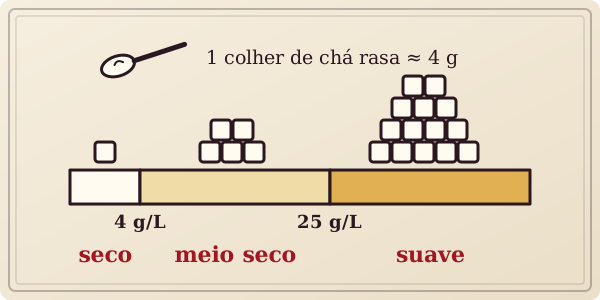
- Dry (seco): up to 4 g/L. Practically nothing;
- Medium-dry (meio seco, or demi-sec): 4 to 25 g/L. A softness most people wouldn't even call sweet;
- Sweet (suave, or doce): above 25 g/L. Openly sweet, and the label has to say so.
For a sense of scale: a level teaspoon of sugar is about 4 g. A sweet wine at 40 g/L carries ten teaspoons per litre. That's not a flaw, it's the recipe: the classic Brazilian sweet wine is made from grapes like Bordô and Isabel, and has had a loyal following for decades.
Sparkling wines have their own scale (and it fools you)
In sparkling wine, the bubbles mask the sugar, so the sparkling scale starts higher. By the same rule: nature (up to 3 g/L), extra-brut (3 to 8), brut (8 to 15), seco or sec (dry: 15 to 20), meio doce or demi-sec (medium-sweet: 20 to 60) and doce (sweet: above 60). Watch out for the catch: a “dry” (seco) sparkling, at up to 20 g/L, has more sugar than a “medium-dry” still wine. If you want the driest of all, ask for nature or brut.
How to tell without tasting
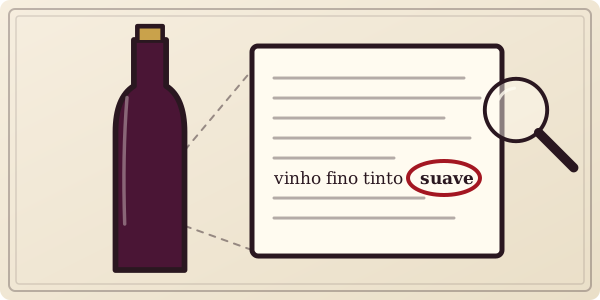
In Brazil, the class has to be on the label, almost always on the back, in small print: look for the word “seco” (dry), “demi-sec” or “suave” (sweet). Imported wine doesn't always say; then the rule of thumb applies: an imported still red or white (no bubbles), with nothing said on the label, is usually dry. And “brut” in any language means dry when there are bubbles.
Which one is right?
Whichever you like. Sweet wine with red meat? If you enjoy it, it's right; it's your table. What the house suggests is only a suggestion: sweet with sweet (dessert, blue cheese) or with spicy food tends to work well, and dry goes with almost anything savoury. Thought “dry” meant bitter? Try a chilled white: dry and not bitter at all.