No-Fuss Guide · No. 6
Is there alcohol-free wine? There is. It just can't go by that name
It exists, and it's one of the fastest-growing categories in the world. In Brazil, there's a bureaucratic irony: the law forbids calling it “alcohol-free wine”. We explain, and we say honestly when it's worth the glass.
What it is (and how it's made)
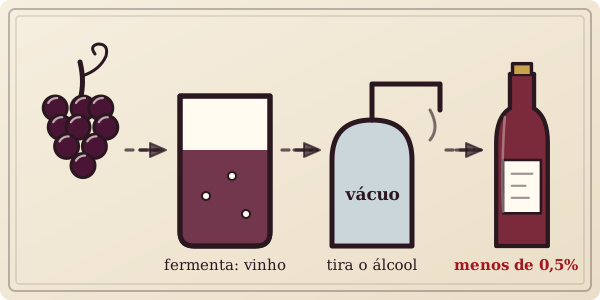
The path is the classic one: grapes, must, fermentation: a real wine is born. Then the alcohol is removed by physical processes, such as vacuum distillation (which evaporates the alcohol at a low temperature, preserving the aromas) or reverse osmosis (which filters it out through membranes). The result has to end up with less than 0.5% alcohol by volume to fit the category.
The catch on the Brazilian label
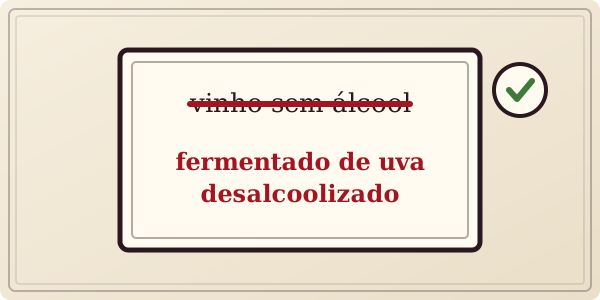
Here's the bit of trivia that wins bets at the bar: in Brazil, Instrução Normativa nº 14/2018 from MAPA (Brazil's Agriculture Ministry) defines the product as “fermentado de uva desalcoolizado” (dealcoholized fermented grape), and expressly forbids the use of “vinho sem álcool” (alcohol-free wine) or “vinho desalcoolizado” (dealcoholized wine) in the official name. In other words: alcohol-free wine → legally, this product can't be called that on the label. If it has added sugar, the name also gets “adoçado” (sweetened); if it's carbonated, “gaseificado”. Look for those words on the shelf. Now you're reading what most people never notice.
And is it any good?
The no-fuss answer: it depends on the style. Alcohol carries aroma, body and that feeling of “warmth”; when it goes, full-bodied reds are the ones that miss it most. On the other hand, dealcoholized sparkling wines and aromatic whites work much better: the bubbles and the acidity hold the structure up. Not by chance, in 2026 the Grande Prova Vinhos do Brasil (a Brazilian wine competition) created an alcohol-free sparkling category alongside the wines: the category stopped being a curiosity and became a serious topic for the industry.
Who it makes sense for
- Anyone driving: the social glass with no breathalyzer to worry about;
- Anyone cutting back on alcohol without wanting to give up the ritual;
- Honest heads-up: “less than 0.5%” isn't “absolute zero”. Pregnant women and anyone who must avoid alcohol entirely should talk to the person who studied for this: their doctor. Here we make wine simple; health is a job for professionals.