No-Fuss Guide · No. 12
What is perlage? The bubbles in sparkling wine, and what they give away about the bottle
Perlage is the French word for “the little bubbles”. Fine and persistent, they tell one story; coarse and in a hurry, they tell another. And the same bubble goes by four names depending on the country: champagne, prosecco, cava, espumante (the name in Brazil and Portugal).
The bubbles are carbon dioxide from a second fermentation
Almost every sparkling wine starts out as a still wine. Then it goes through a second fermentation: yeasts and a little sugar are added, and the carbon dioxide that forms stays trapped. (The exception is sparkling Moscatel, which comes from a single fermentation, stopped halfway so some sugar is left over.) Trapped where is what separates the two methods:
- Traditional method (or champenoise): the second fermentation happens inside the bottle itself, which rests for months or years on the yeasts. Fine bubbles, aromas of bread and brioche. It's the method of Champagne, of Cava and of Brazil's top sparkling wines;
- Charmat method (or tank method): the second fermentation happens in a stainless steel tank, and the wine is bottled under pressure. Faster and cheaper; bigger bubbles, a fresh-fruit profile. It's the method of Prosecco and of most everyday sparkling wines.
How to read the perlage in the glass
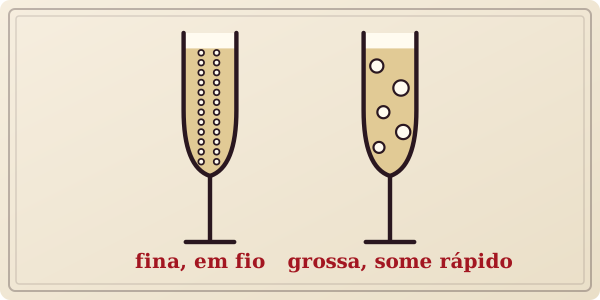
Serve it in a clean, tall glass. Fine, persistent, rising in a thin stream: usually traditional method, with time on the yeasts. Coarse and quick to vanish: young Charmat, or a glass with detergent residue (grease kills bubbles). It's not a rule of quality: a good Prosecco has cheerful bubbles and is right just as it is.
Champagne, prosecco, cava, espumante: what's the difference?
- Champagne: only what's made in the Champagne region of France, by the traditional method, almost always with Chardonnay, Pinot Noir and Meunier (four other grapes are allowed and add up to 0.3% of the vineyard). The name is protected; “champagne” from anywhere else is sparkling wine;
- Prosecco: Italian sparkling wine from Veneto and Friuli, from the Glera grape, almost always Charmat. Fresh, with apple and pear;
- Cava: the Spanish one, traditional method, mostly from Catalonia;
- Brazilian espumante: Serra Gaúcha makes it by both methods, and sparkling is the category where Brazil collects the most medals. The most-rated ones are in the search.
Brut, nature, demi-sec: the sugar in the bubbles
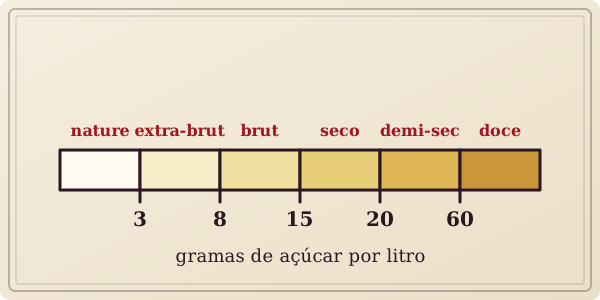
The sparkling scale, the same one Brazilian law wrote into Decree 8.198/2014 (replaced in 2025; the categories live on in Law 7.678/88 and labels still follow the numbers): nature (up to 3 g/L of sugar), extra-brut (3 to 8), brut (8 to 15), seco (dry: 15 to 20), demi-sec (20 to 60) and doce (sweet: above 60). Want the driest: nature or brut. Want it for dessert: demi-sec or Moscatel, sweet by nature. There's more in Dry or sweet wine?.
Serving without losing the bubbles
Well chilled (6 to 10 °C, see the right temperature), glass tilted, poured slowly. The cork comes out with a sigh, not a pop: the pop means lost gas and lost wine. Leftovers? A clamp-style sparkling stopper and the fridge: it keeps for 1 to 3 days.