No-Fuss Guide · No. 13
Does wine make you fat? A glass has 120 calories, and alcohol foots the bill
The question arrives with the glass and the answer is on the label: the calories in wine are almost all alcohol. Here are the numbers, where they come from and what changes between dry, sweet (suave) and sparkling. No health promises, because that's not our department.
The numbers
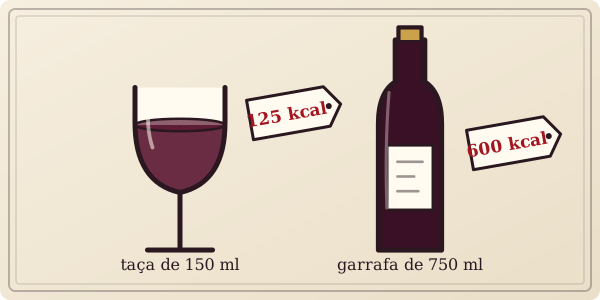
- One glass (150 ml) of dry red: about 125 kcal;
- One glass of dry white: about 120 kcal. The difference from red is smaller than the variation between two bottles;
- One bottle (750 ml) of 13% wine: around 600 kcal;
- Brut sparkling: a little less per glass, because the glass is smaller (120 ml) and the alcohol is usually lower;
- Sweet, demi-sec and dessert wines: more. The leftover sugar adds up; a Port or a dessert Moscatel can go past 160 kcal in a small glass.
The figures come from the USDA table (the US government's food database) and vary with the alcohol content: each gram of alcohol has 7 kcal, almost double the sugar (4 kcal). A 14.5% wine carries more calories than a 12% one, dry or not.
So, does it make you fat?
A calorie is a calorie, and wine has them. What nutrition science keeps repeating is that alcohol has one peculiarity: it doesn't fill you up. Two glasses add up to 250 kcal and dinner stays the same size. The honest answer is that gaining weight or not depends on the day's total, not on the glass by itself; and that's a sum for whoever can do the sums for your case, which is a health professional, not a wine website.
What the house really says
We've already knocked down the myth that wine is good for the heart here. We're not going to create the opposite myth, that of “light wine”. The lower-calorie label exists (less alcohol, less sugar), and dealcoholized wine has a fraction of the calories (a tenth to a third, depending on the sugar left over), but neither of them is medicine or a diet. Drink because you like it, in the amount your day has room for.
Rule of thumb for reading the label
- Alcohol content is the number that weighs most: 11% is light, 14.5% is heavy, in calories too;
- “Seco” (dry) on a Brazilian label = up to 4 g/L of sugar (the scale the law used until 2025 and the industry still follows), which means almost no calories coming from sugar; the law's scale is here;
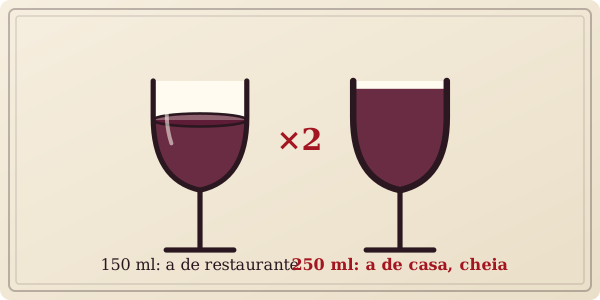
- The glass matters: a restaurant “glass” holds 150 ml; the one at home, filled up, gets to 250. The count doubles without you noticing.