No-Fuss Guide · No. 1
How to read a label without the struggle
The label looks like a French exam full of trick questions. It isn't. There are 4 things that matter; the rest is marketing and scenery.
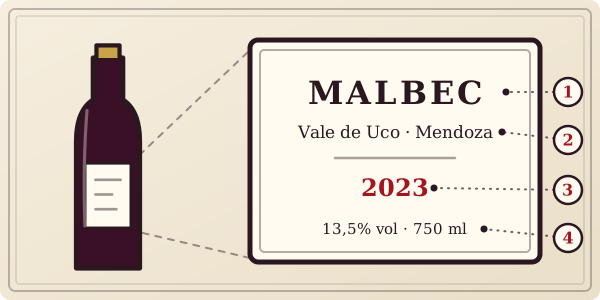
1. The grape (or the blend)
It's the best predictor of style. Malbec leans soft and fruity; Cabernet Sauvignon, full-bodied with noticeable tannin; Pinot Noir, light and delicate. When the label names the region instead of the grape (common in Europe), the region implies the grape: a Chablis is Chardonnay, a red Rioja is almost always Tempranillo. With half a dozen grapes in your memory, you can already find your way around most shelves in Brazil.
2. The region and the producer
Region tells you the climate, and climate tells you the style: cool places lean toward lighter, more acidic wines; warm ones, toward fuller-bodied, fruitier ones. The producer is the surname: over time you work out which houses you like, and that's worth more than any medal stamped on the label.
3. The vintage (the year)
For everyday wine, it mainly tells you the age. Most supermarket wines are made to be drunk young, within 2 or 3 years of the vintage. The idea that “the older, the better” only holds for a minority of wines built to age. A light white from 6 years ago isn't a relic: it's a gamble.
4. The alcohol content
It says a lot about the body: around 11–12% usually means a lighter wine; 14–15%, a more powerful, “hot” one. And here's a savvy reading tip: higher alcohol usually means very ripe grapes. In generous regions and vintages, it can be a hint of concentration and even of ageing potential (alcohol is one of wine's natural preservatives, along with acidity and tannin). A hint, not a guarantee: overly hot, unbalanced wines exist by the truckload too. Finally, it's an honest reminder that wine is an alcoholic drink: dose and moderation are part of the reading.
Watch out for the pretty words: Reserva, Gran Reserva and the worst of them all
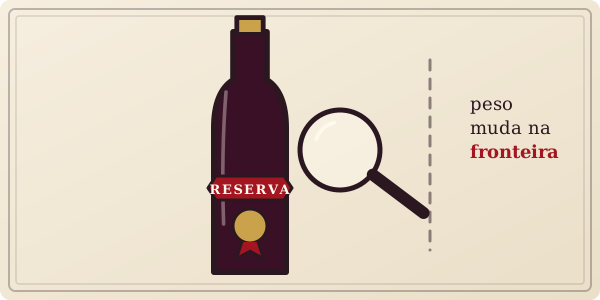
“Reserva” only carries weight when the country's law backs the word, and the weight changes at the border. In Spain, Reserva and Gran Reserva come with strict ageing rules: there, the word means something. Argentina has an official rule (from the INV): Reserva is a minimum ageing time, with no mandatory barrel; it tells you age, not quality. Brazil has had a law since 2018 too (IN 14/2018 from MAPA), and it's a flexible one: Reserva = alcohol of 11% or more and, for reds, 12 months of ageing (a tank will do); Gran Reserva = 18 months, with some time in wood. The bar is low, and plenty of entry-level wines clear it. In Chile, the law only asks for half a degree of alcohol above the minimum, with no ageing time. Translation: a Spanish Reserva says something; in Brazil and its neighbours, be sceptical and look at the rest of the label.
And the worst of them all: Reservado → reserved for no one. The word hints at a family tie with “Reserva”, but Brazilian law defines “Reservado” as the opposite: a “young wine ready to drink”, with no ageing at all (IN 14/2018, art. 30). It's a play on words, and in practice it's the name of the winery's most basic line.
In Brazil, the label has rules
In other words: alcohol content, product name (with its legal class: fino or de mesa, meaning fine or table wine; seco or suave, meaning dry or sweet) and producer or importer are on the label because Brazilian law requires them. Grape and vintage are optional, but when they appear there's a rule: the grape named has to make up at least 75% of the wine, and the vintage, 85% (IN 14/2018, arts. 27 and 28). You just need to know where to look.