No-Fuss Guide · No. 16
How to chill wine fast: the bucket with water, ice and salt (15 to 20 minutes)
Guests just arrived and the white is warm? A bucket of water, ice and salt sorts it out in 15 to 20 minutes, and we show you the thermometer test that proved it. The freezer takes twice as long and makes you pay dearly if you forget. The times, type by type, and what's a myth.
The bucket: water, ice and salt
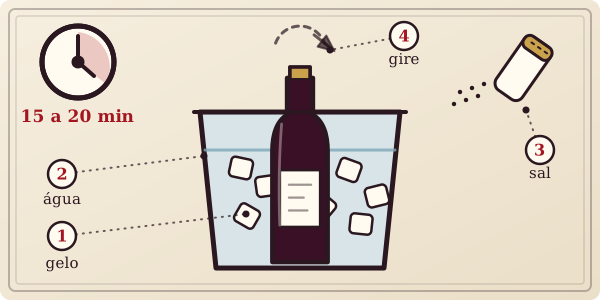
Ice alone doesn't chill: the cubes touch the bottle at only a few points, and the air between them insulates. It's the water that carries the cold to the whole bottle. Salt melts part of the ice and the brine drops below zero: in a test kitchen, the salted bath measured −8 °C, against 0 °C for the bath without salt.
- Half ice, half cold water, in a bucket, a big pot or the sink with the plug in.
- Salt on top: from a handful of coarse salt to a cup. The measured recipe from Cook’s Illustrated (in US measures, rounded): about 1 liter of water, 4 liters of ice and a cup (around 290 g) of fine salt.
- The bottle sunk up to the neck: whatever stays out of the water doesn't chill.
- Spin the bottle every now and then: it refreshes the brine around the glass.
With spinning, in 15 to 20 minutes the wine is ready to serve: that's what Wine Spectator and Decanter say, and a Master Sommelier talks about 15 or so. The test below measured all the way down to 3 °C, colder than sparkling wine calls for (8 to 10).
The race, measured with a thermometer
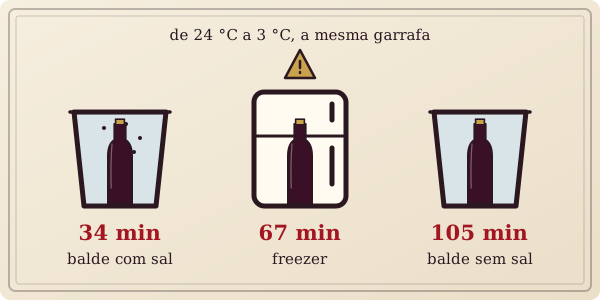
Cook’s Illustrated put the same bottle of white, at 24 °C, to chill three ways and timed it until it reached 3 °C: ice brine, 34 minutes; freezer, 67; ice water without salt, 105. Salt cuts the time to a third. (And 3 °C is too cold to drink: to serve, you stop well before that.)
No salt? No hurry?
- Bucket with just water and ice, half and half: that's what the Comité Champagne recommends, 30 minutes before serving. The Union des Maisons de Champagne reckons longer: 40 minutes for a bottle that came out of the cellar at 11 °C, and at least two hours for a bottle at room temperature. That's why salt is worth it when the bottle is warm.
- Fridge: no hurry, that's the way. A sparkling wine at room temperature takes about 3 hours, by the Union des Maisons de Champagne's count; the Comité talks about “a few hours in the bottom of the fridge”. The bottom, not the door: the door is the warmest part. For white, count on 3 hours too (a Tasting Table test came out at that).
Freezer: only with an alarm on your phone
It works, but it's slower than the bucket (twice the time, measured) and makes you pay dearly if you forget. Decanter recommends 22 minutes for lightly chilled and 28 for well chilled; sparkling, about 20, and more attention. The risk isn't the cold, it's freezing: wine freezes between −6 and −9 °C, depending on alcohol and sugar, and the ice expands, pushes the cork out and can crack the glass. Sparkling is the worst case: it already holds 5 to 6 bar of pressure and, forgotten, it bursts or spits the cork (Decanter reports a bottle with its neck snapped off after about 3 hours). The Union des Maisons de Champagne sums it up: never in the freezer. And sparkling wine that froze and thawed loses a good part of its bubbles, even if the bottle survives. Forgot it and it came out in one piece? Thaw it in the fridge and open it away from people: the wine is still safe to drink, just with less fizz.
The wet paper towel wrapped around the bottle in the freezer is a myth: in one test with soda bottles and sensors, and in another with wine and a thermometer, the wrapped bottle chilled the same or slower. The towel turns into a coat.
Ice in the glass? You can.
“Do what you like with your wine”, says a Master of Wine in Decanter. Just know that ice melts and dilutes. Frozen grapes in the glass chill without diluting: in one test, they took the glass down to 7 °C in 3 minutes and held the cold for more than ten. And cold water on the side, for you: a glass of water between one glass of wine and the next.
The range, type by type
Ours is in guide No. 9: sparkling 6 to 10 °C, light white and rosé 8 to 12, light red 12 to 14, full-bodied red 16 to 18. It fits within what the Comité Champagne says (8 to 10 °C for Champagne), Decanter (which puts a red of medium body at 14 to 16) and Embrapa. Two reminders the research reinforced:
- Red goes in the fridge too. Light red (Pinot Noir, Gamay, Corvina) is made to drink at 12 or 13 °C, and even a full-bodied one gains from 20 minutes in the fridge on a hot day. White Port and tawny go properly chilled: the IVDP says 6 to 10 °C for white and 10 to 14 for tawny.
- Err on the cold side. In the glass, wine warms up fast: a red served at 18 °C turns into 22 in no time. If it got too cold, hold the glass by the bowl for a minute.